


ValedaTM PBM
A treatment for Dry AMD* that lets you see more life
Find a provider near you who offers ValedaTM PBM, the first and only FDA-authorized light-based therapy for Dry AMD.1
*The presence of at least 3 medium drusen(>63 μm and ≤125 μm in diameter), or large drusen (>125 μm in diameter), or non-central geographic atrophy.
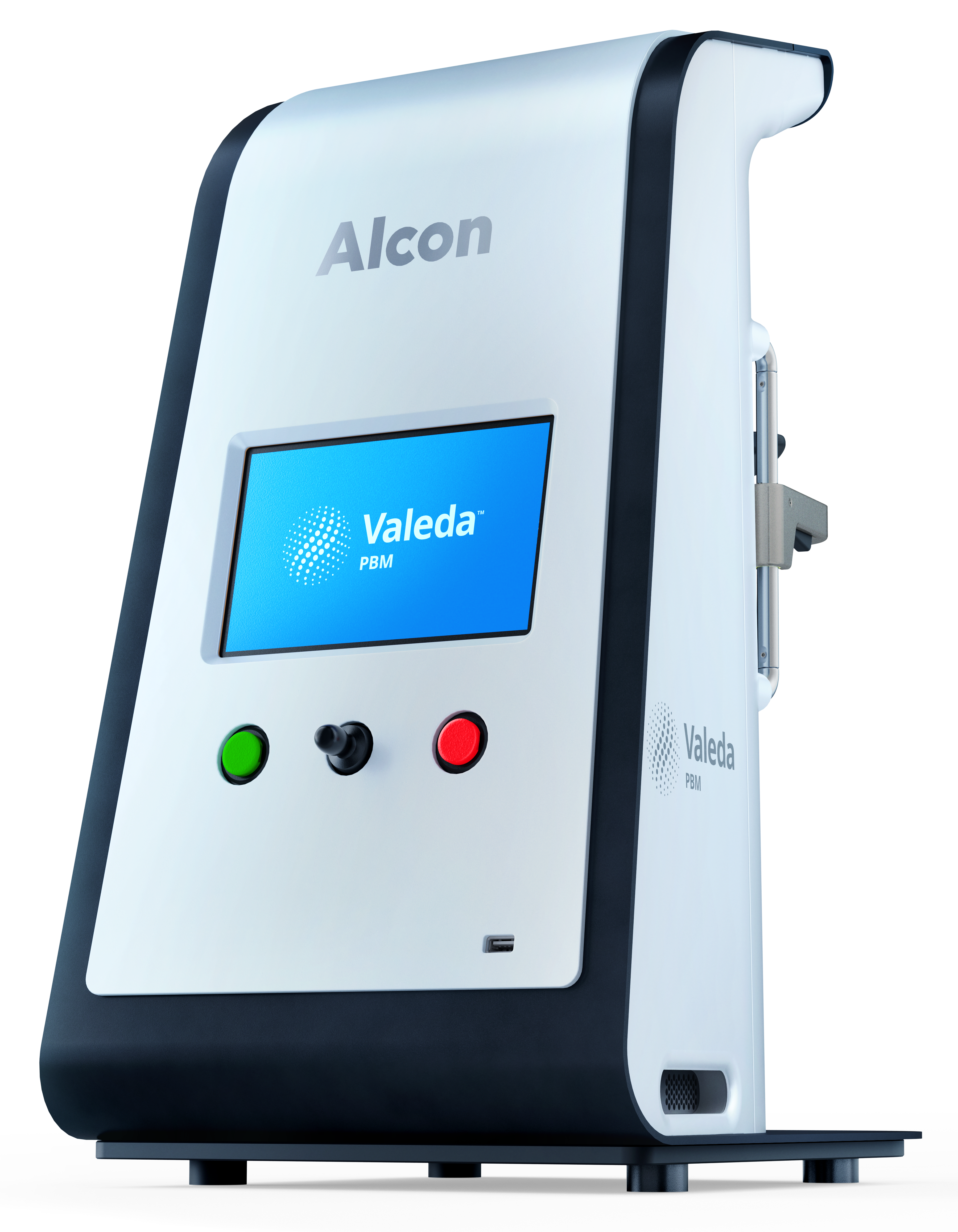
Talk to your doctor about how ValedaTM PBM can improve and maintain your vision so that you don't miss the moments that matter.
How does ValedaTM PBM work?
ValedaTM PBM uses a light-based therapy called photobiomodulation (PBM) to help stimulate energy production in the cells of your eyes.2

Treatments are given at your doctors office or clinic and may take 10 minutes or less to complete.3

ValedaTM PBM is noninvasive, which means there are no needles; only light is used.3

Your pupils are not dilated, and there is no anesthesia. This means you are free to carry on with your daily activities after treatment.3
Understanding Dry Age-related Macular Degeneration (AMD)
Dry AMD affects the retinal cells of your eye, causing them to slowly break down.4
The retina is a thin, light-sensitive structure in the back of the eye that acts like a sensor.5
It's job is to capture light and convert it into signals that are sent to the brain.5
Symptoms of dry AMD may affect how you see and can include:7

Blurry vision while reading, driving, or watching TV4

Colors are harder to distinguish4

Visual distortion, such as straight lines, seem bent4

Trouble adjusting to dim light4
See more and miss less with ValedaTM PBM

Find a ValedaTM PBM provider
Access More Information and Resources Below

What to know about ValedaTM PBM
Download the ValedaTM PBM Patient Brochure to learn more about how ValedaTM PBM works, what to expect from treatment, and how it could help.
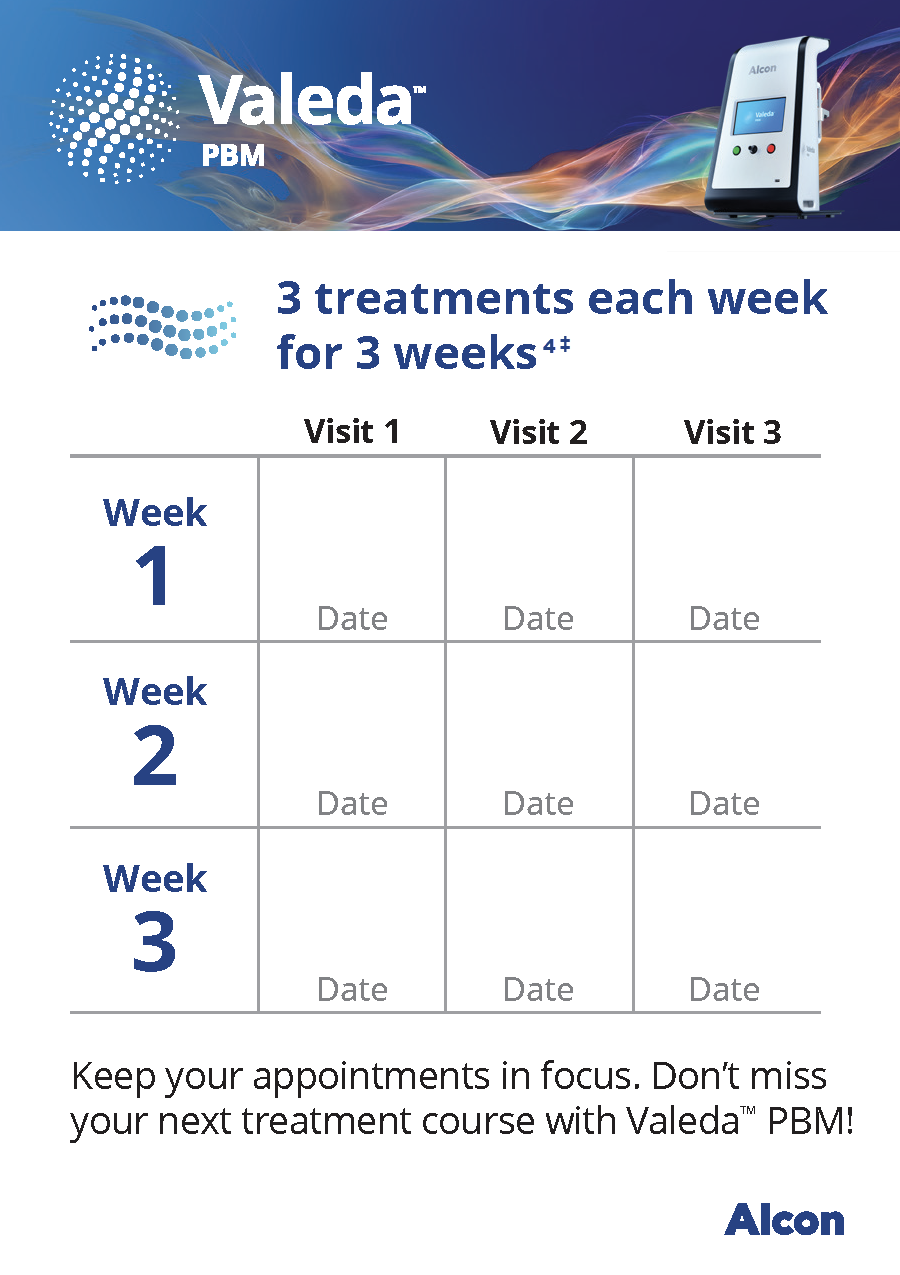
Keep track of your treatment
Download the ValedaTM PBM Treatment Tracker card to help you keep track of your appointments and treatment courses.
Indications for Use
The Valeda Light Delivery System is intended to provide improved visual acuity in patients with best-corrected visual acuity of 20/32 through 20/70 and who have dry age-related macular degeneration (AMD) characterized by:
• The presence of at least 3 medium drusen (> 63 μm and = 125 μm in diameter), or large drusen (> 125 μm in diameter), or non-central geographic atrophy, AND
• The absence of neovascular maculopathy or central-involving geographic atrophy
After about two years, the Valeda Light Delivery System treatment provides improved mean visual acuity of approximately one line of visual acuity (ETDRS) compared to those not receiving the treatment.
Contraindications for Use
As a precaution, patients have not been tested and should not be treated with Valeda if they have any known photosensitivity to yellow light, red light, or near-infrared radiation (NIR), or if they have a history of light-activated central nervous system disorders (e.g., epilepsy, migraine). In addition, patients should not receive treatment within 30 days of using photosensitizing agents (e.g., topicals, injectables) that are affected by 590, 660, and/or 850 nm light before consulting with their physician.
Precautions
It is possible that treatment benefit may not persist significantly after treatment is stopped. The clinical study provided no significant data concerning the safety and effectiveness of the device should treatments be applied more frequently than described in this manual, or if more than 54 total treatments are delivered per eye.
REFERENCES
1. Valeda Photobiomodulation System Instructions for Use. REF-27863.
2. Boyer D, Hu A, Warrow D, et al. 13-month efficacy and safety evaluation of multiwavelength photobiomodulation in nonexudative (dry) age-related macular degeneration using the Lumithera Valeda Light Delivery System. Retina. 2024;44(3):487-497. doi:10.1097/IAE.0000000000003980
3. Valeda US User Manual. LBL-0001-01 Rev C. 2025. REF-27575.
4. Mayo Clinic. Dry macular degeneration. Accessed April 20, 2026. https://www.mayoclinic.org/diseases-conditions/dry-macular-degeneration/symptoms-causes/syc-20350375
5. Koksaldi S, Kayabasi M, Karti O, Saatci AO. Clinical anatomy of the macula. Med Hypothesis Discov Innov Ophthalmol. 2025;14(2):17-27. doi:10.51329/mehdiophthal1520