

Vision Condition
Can I Sleep in My Contact Lenses?
5 mins read

Some lenses are specifically designed and prescribed for extended or overnight wear, including those used to reshape the cornea. However, this applies to a small group of lenses with specific uses. Follow your eye doctor's guidance on lens wear and avoid sleeping in lenses unless specifically advised.
Studies suggest that around 85% of contact lens users have engaged in at least one behavior linked to a higher risk of eye infections, including sleeping in their lenses.1 Sleeping in contact lenses can increase the likelihood of infection by six to eight times.2 These infections range from minor irritations to severe cases, potentially affecting the cornea and vision.

The cornea’s exposure to oxygen helps maintain its defenses against bacteria. Without lenses, the tear film transports oxygen and helps clean the corneal surface. When you sleep, closed eyelids reduce the oxygen available to the cornea. When combined with contact lenses, the reduced oxygen flow can increase the risk for contact lens–related eye infections.2 Specific bacteria, like Staphylococcus aureus and Pseudomonas aeruginosa, can infect the cornea if there’s any abrasion, increasing the risk of complications.
If an infection does develop, early treatment with prescribed eye drops may resolve it. However, in more severe cases, surgery might be needed, and the cornea could be permanently scarred.2 Sleeping in contact lenses not prescribed for extended or overnight wear can cause eye strain, pain, increased light sensitivity, and may even cause the lens to adhere too tightly to your eye, making removal difficult.
Chronic oxygen deprivation can, in rare cases, lead to corneal neovascularization—where blood vessels grow into the corneal area to compensate, potentially affecting vision and eye health.3
Wear lenses overnight only if they’re specifically designed and prescribed for extended use.
If you experience discomfort, blurriness, discharge, redness, or excessive watering, remove your lenses immediately and consult an eye care professional.
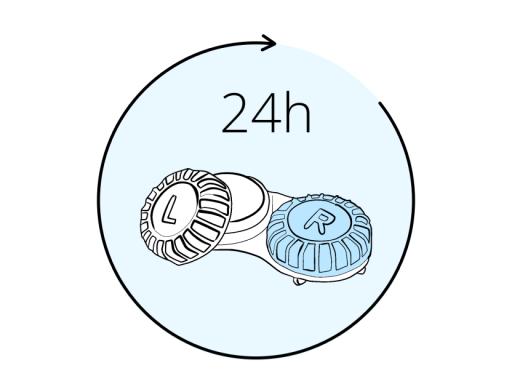
Another type of overnight lens, called “ortho-K” (orthokeratology), reshapes the eye overnight. Unlike daily wear lenses, ortho-K lenses are worn only during sleep and removed in the morning, temporarily improving vision throughout the day. This approach is used for certain vision needs.
For many lens types, removing lenses before sleep can be beneficial for eye health and comfort. Letting your eyes rest naturally at night is generally recommended—unless your lenses are specifically prescribed for overnight wear.

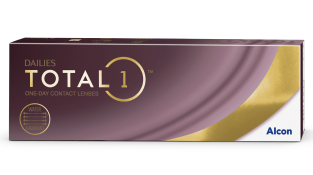
DAILIES TOTAL1™
With only a cushion of moisture touching the eye, it’s the contact lens that feels like nothing.4

TOTAL30™
The first and only monthly replacement Water Gradient contact lenses, so comfortable they feel like nothing, even at day 30.5
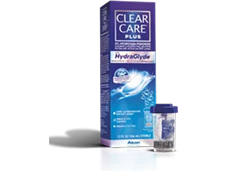
CLEAR CARE® PLUS
CLEAR CARE® PLUS Solution cleans and disinfects your contact lenses with the bubbling power of hydrogen peroxide.
REFERENCES
1. Cope, J. R., Collier, S. A., Nethercut, H., Jones, J. M., Yates, K., & Yoder, J. S. (2017). Risk behaviors for contact lens-related eye infections among adults and adolescents—United States, 2016. MMWR Morbidity and Mortality Weekly Report, 66(32), 841–845. https://doi.org/10.15585/mmwr.mm6632a2
2. Cope, J. R., Konne, N. M., Jacobs, D. S., et al. (2018). Corneal infections associated with sleeping in contact lenses—Six cases, United States, 2016–2018. MMWR Morbidity and Mortality Weekly Report, 67, 877–881. https://www.cdc.gov/mmwr/volumes/67/wr/mm6732a2.htm.
3. Sharif, Z., & Sharif, W. (2019). Corneal neovascularization: Updates on pathophysiology, investigations, and management. Romanian Journal of Ophthalmology, 63(1), 15–22. https://pubmed.ncbi.nlm.nih.gov/31198893/
Ask your eye care professional for complete wear, care and safety information. 
© 2025 Alcon Inc. US-VC-2400094

