

Alcon at AAO 2026
October 10-12,
2026 New Orleans,
LA New Orleans Ernest Morial
Convention Center
Booth #1519
Alcon at AAO 2026
October 10-12,
2026 New Orleans,
LA New Orleans Ernest Morial
Convention Center
Booth #1519
Alcon Highlights its Comprehensive Innovation Portfolio at AAO 2026
Immerse yourself with hands-on demonstrations of Alcon’s latest breakthrough innovations.
Key highlights include:
Hands-on demonstrations of the UNITY® platform showcase next-generation surgical advancements
Recent innovations, including Clareon® PanOptix® Pro and Valeda™ PBM, highlight Alcon's commitment to advancing innovation across the continuum of eye care

UNITY® Technology Experiences
Experience the latest innovations in the UNITY® VCS|CS and UNITY® M technology suites through private demonstrations with Alcon experts. Connect one-on-one to explore the technologies and discuss their potential role in your surgical practice. Notify your Alcon representative to reserve your spot.

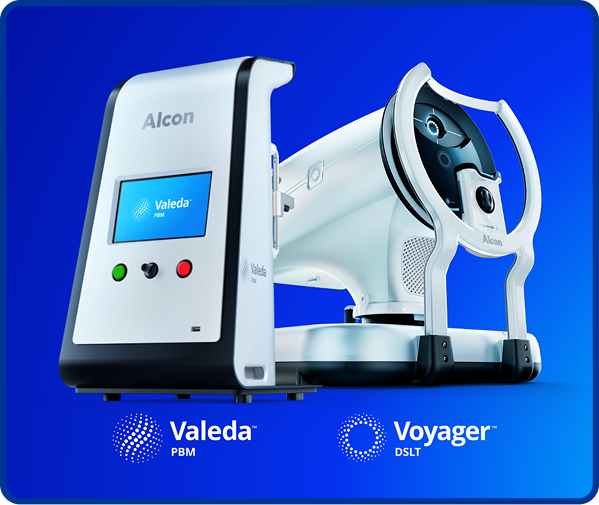
Voyager™ DSLT and Valeda™ PBM Technology Suites
Discover Alcon's latest clinic-based treatments for glaucoma and dry AMD through a private demonstration tailored to your interests. Meet with Alcon specialists to learn more about Voyager™ DSLT and Valeda™ PBM and see the technologies firsthand. Notify your Alcon representative to reserve your spot.
Visit Booth #1519 for demos of Alcon’s latest innovations
Exhibit hours
• Saturday, October 10, 9:00 am - 5:00 pm
• Sunday, October 11, 9:00 am - 5:00 pm
• Monday, October 12, 9:00 am - 3:30 pm
Experience Extraordinary with UNITY® VCS|CS
Discover Alcon’s most advanced vitreoretinal and cataract surgical capabilities, together in one integrated platform. We invite you to demo UNITY® VCS|CS and experience first-hand the innovative technologies that can deliver surgical efficiency and stability with more physiological conditions.1
1. Unity™ VCS and CS User Manual
Lead with the Power of Clareon® PanOptix® Pro
Explore the latest on the world's leading trifocal with over 4 million implants and counting.1* Clareon® PanOptix® Pro is everything you love about PanOptix®, with half the light scatter.2,3†
*Based on worldwide IOL unit sales of AcrySof IQ PanOptix®, Clareon® PanOptix® and Clareon® PanOptix® Pro through Q2 2026.
†PanOptix® has 88% light utilization (12% scatter light)/PanOptix® Pro 94% light utilization (6% scatter light).
1. Alcon data on file, 2025. REF-28305.
2. Alcon data on file, 2025. REF-25218.
3. Alcon data on file, 2015. REF-08546.
See the future of dry AMD care with Valeda™ PBM
Experience the first and only FDA-authorized treatment for early and intermediate dry AMD to improve and maintain vision for up to 2 years.1*
Find out more about Alcon’s noninvasive treatment that offers a smooth patient experience — dilation free, speculum free, anesthesia free and injection free.2
*The presence of at least 3 medium drusen (>63 μm and ≤125 μm in diameter), or large drusen (>125 μm in diameter), or non-central geographic atrophy.
1. Valeda US Instructions for Use.
2. Valeda US User Manual 2025.
Introducing Precise Control with
UNITY® M
Discover UNITY® M, Alcon’s new premium ophthalmic microscope and the latest addition to the UNITY® portfolio. Visit our booth for a hands-on demonstration and see how its advanced optics, novel illumination, improved ergonomics and modular design are built to support surgeon confidence, personalization and future scalability.1-3
1. Alcon Data on File, 2026. REF-29340.
2. Alcon Data on File, 2026. REF-29342.
3. Unity M User Manual.
Discover Clareon® TruPlus IOLs
Clareon® TruPlus® is Alcon's next-generation monofocal and toric IOL platform featuring an enhanced optical design developed to build upon the proven performance of the Clareon® family.1,2 Visit our booth to learn how Clareon® TruPlus® expands surgeon choice with options designed to support a broad range of cataract patients while maintaining the clarity and consistency of the Clareon® platform.
1. Alcon data on file, 2025. [REF-28331].
2. Alcon data on file, 2025. [REF-28335].
Unlock First-Line Glaucoma Care with Voyager™ DSLT
Voyager™ DSLT is now available as an innovative treatment option for first-line glaucoma care. Direct Selective Laser Trabeculoplasty (DSLT) provides gonio-free direct laser energy through the limbus to the trabecular meshwork and includes proprietary eye-tracking technology to deliver consistent, precise treatment at the touch of a button.1 Get a hands-on demo of Voyager™ DSLT and learn how to unlock first-line glaucoma care.
1. Voyager DSLT User Guide (US). [REF-26202].

The Importance of Natural Tear Production for the Treatment of the Signs and Symptoms of Dry Eye Disease
Visit the Alcon booth for a look at TRYPTYR® (acoltremon ophthalmic solution) 0.003%, a prescription medication approved for the treatment of the signs and symptoms of Dry Eye Disease by the U.S. FDA. TRYPTYR is an innovative treatment option for the millions of dry eye sufferers.
INDICATIONS AND USAGE
TRYPTYR (acoltremon ophthalmic solution) 0.003% is indicated for the treatment of the signs and symptoms of dry eye disease (DED).
IMPORTANT SAFETY INFORMATION
Warnings and Precautions
Potential for Eye Injury and Contamination: To avoid the potential for eye injury and contamination, advise patients not to touch the vial tip to the eye or other surfaces.
Use with Contact Lenses: TRYPTYR should not be administered while wearing contact lenses. If contact lenses are worn, they should be removed prior to administration of the solution. Lenses may be reinserted 15 minutes following administration.
Adverse Reactions
In clinical trials, the most common adverse reaction was instillation site pain (50%).
Please click here for the TRYPTYR Full Prescribing Information.
Frequently Asked Questions
Alcon will showcase a broad portfolio of innovations spanning cataract, retina and glaucoma. Highlights include the UNITY® platform, Clareon® TruPlus® IOLs, Valeda™ Photobiomodulation (PBM) for dry AMD, and Voyager™ DSLT for glaucoma, along with new clinical and real-world evidence across our portfolio.
The UNITY® platform is Alcon's connected ecosystem of surgical technologies designed to support the surgical experience from visualization through procedure execution. At AAO, attendees can experience UNITY® VCS|CS and the UNITY® M microscope and learn how the platform is designed to bring together advanced technologies across the surgical workflow.
Attendees can visit Alcon at the AAO Exhibit Hall Booth #1519, where they can explore product demonstrations, scientific presentations, private technology suites and hands-on experiences across Alcon's cataract, retina and glaucoma portfolios.
Alcon at AAO 2026
October 10-12, 2026
New Orleans Ernest Morial
Convention Center
Booth #1519
Visit Us in Booth #1519
Follow MyAlcon on LinkedIn, Facebook, and Instagram for product news, customer stories, and live updates during AAO.


UNITY® VCS and CS Important Product Information
Caution: Federal (USA) law restricts this device to sale by, or on the order of, a physician.
Indications / Intended Use:
UNITY VCS:
The UNITY VCS console, when used with compatible devices, is indicated for use during anterior segment (i.e. phacoemulsification and removal of cataracts) and posterior segment (i.e. vitreoretinal) ophthalmic surgery.
In addition, with the optional laser this system is indicated for photocoagulation (i.e. vitreoretinal and macular pathologies), iridotomy and trabeculoplasty procedures.
UNITY CS:
The UNITY CS console, when used with compatible devices, is indicated for use during anterior segment (i.e. phacoemulsification and removal of cataracts) ophthalmic surgery.
Warnings:
Appropriate use of UNITY VCS and CS parameters and accessories is important for successful procedures. The console supports various accessories to perform various surgical procedures. Accessories include handpieces and probes, as well as tips and sleeves when necessary. Different accessories are required for different procedures and operating modes.
Test for adequate irrigation and aspiration flow, reflux, and operation of each accessory prior to entering the eye.
The consumables used in conjunction with ALCON® instrument products constitute a complete surgical system. To avoid the risk of a patient hazard, do not mismatch consumable components or use settings not specifically adjusted for particular consumable component combinations.
AEs / Complications:
Inadvertent activation of functions that are intended for priming or tuning accessories while the accessory is in the eye can create a hazardous situation that could result in patient injury. During any ultrasonic procedure, metal particles may result from inadvertent touching of the ultrasonic tip with a second instrument. Another potential source of metal particles resulting from any ultrasonic handpiece may be the result of ultrasonic energy causing micro abrasion of the ultrasonic tip.
ATTENTION:
Refer to the Directions for Use for the accessories/consumables and User Manual for a complete listing of indications, warnings, cautions and notes.
Clareon® PanOptix® Pro Trifocal IOLs Important Product Information
CAUTION: Federal (USA) law restricts this device to the sale by or on the order of a physician.
INDICATIONS
The Clareon® PanOptix® Pro Trifocal IOLs include Clareon® PanOptix® Pro and Clareon® PanOptix® ProToric. The Clareon® PanOptix® Pro Trifocal IOL is indicated for primary implantation in the capsular bag in the posterior chamber of the eye for the visual correction of aphakia in adult patients, with less than 1 diopter of pre-existing corneal astigmatism, in whom a cataractous lens has been removed. The lens mitigates the effects of presbyopia by providing improved intermediate and near visual acuity, while maintaining comparable distance visual acuity with a reduced need for eyeglasses, compared to a monofocal IOL. In addition, the Clareon®PanOptix® ProToric Trifocal IOL is indicated for the reduction of residual refractive astigmatism.
WARNINGS/PRECAUTIONS: Careful preoperative evaluation and sound clinical judgment should be used by the surgeon to decide the risk/benefit ratio before implanting a lens in a patient with any of the conditions described in the Directions for Use labeling. Physicians should target emmetropia, and ensure that IOL centration is achieved.
For the Clareon® PanOptix® Pro Toric Trifocal IOLs, the lens should not be implanted if the posterior capsule is ruptured, if the zonules are damaged, or if a primary posterior capsulotomy is planned. Rotation can reduce astigmatic correction; if necessary lens repositioning should occur as early as possible prior to lens encapsulation.
Some visual effects may be expected due to the superposition of focused and unfocused multiple images. These may include some perceptions of halos, radial lines around point sources of light (starbursts) under nighttime conditions, or glare, as well as other visual symptoms. As with other multifocal IOLs, there is a possibility that visual symptoms may be significant enough that the patient will request explant of the multifocal IOL. A reduction in contrast sensitivity as compared to that expected with a monofocal IOL may be experienced by some patients and may be more prevalent in low lighting conditions. Therefore, patients implanted with multifocal IOLs should exercise caution when driving at night or in poor visibility conditions.
Patients should be advised that unexpected outcomes could lead to continued spectacle dependence or the need for secondary surgical intervention (e.g., intraocular lens replacement or repositioning).
As with other multifocal IOLs, patients may need glasses when reading small print or looking at small objects. Posterior capsule opacification (PCO), may significantly affect the vision of patients with multifocal IOLs sooner in its progression than patients with monofocal IOLs. Prior to surgery, physicians should provide prospective patients with a copy of the Patient Information Brochure available from Alcon informing them of possible risks and benefits associated with the IOLs.
ATTENTION: Reference the Directions for Use labeling for each IOL for a complete listing of indications, warnings and precautions.
Alcon Voyager DSLT Important Product Information
Caution: Federal (USA) law restricts this device to sale by, or on the order of, a physician.
Intended Use: Voyager DSLT is a prescription device intended for use in performing selective laser trabeculoplasty.
Indications: Voyager DSLT is indicated for use in selective laser trabeculoplasty (SLT).
Contraindications: Use of the Voyager DSLT device is contraindicated in the following patients:
• Patients who are unable to fixate their head and/or eyes, such as patients suffering from uncontrolled nystagmus, tremors or similar conditions.
• Patients with a pupil that cannot constrict to a diameter of 4 mm or less.
Warnings:
• Users should wear laser safety eyewear while performing a procedure with the Voyager DSLT device to avoid injury to the user’s eyes.
• Use of controls or adjustments or performance of procedures other than those specified herein may result in hazardous laser radiation exposure.
• Caution should be used when treating patients who have active uveitis or neovascularization that involves the iridocorneal angle with the Voyager DSLT device.
• The effect of selective laser trabeculoplasty energy on glaucoma implants located in the iridocorneal angle has not been studied. Because your version of the Voyager DSLT device does not allow masking of the implant area (i.e. ability to program a laser pattern which skips the local area of the implant), the use of the device is not recommended in eyes which have a glaucoma implant at any clock hour in the iridocorneal angle.
• In the pivotal clinical study of the Voyager DSLT device, the safety and effectiveness of re-treatment was not studied; therefore, the level of IOP reduction and potential for complications associated with re-treatment has not been established. Re-treatment is not recommended.
ATTENTION: Refer to the Voyager DSLT Directions for Use operating instructions and for the accessories/consumables and User Guide for a complete listing of indications, warnings, cautions and notes.
Valeda Important Product Information (HCP facing)
Indications for Use
The Valeda Light Delivery System is intended to provide improved visual acuity in patients with best-corrected visual acuity of 20/32 through 20/70 and who have dry age-related macular degeneration (AMD) characterized by:
• The presence of at least 3 medium drusen (> 63 μm and = 125 μm in diameter), or large drusen (> 125 μm in diameter), or non-central geographic atrophy, AND
• The absence of neovascular maculopathy or central-involving geographic atrophy
After about two years, the Valeda Light Delivery System treatment provides improved mean visual acuity of approximately one line of visual acuity (ETDRS) compared to those not receiving the treatment.
Contraindications for Use
As a precaution, patients have not been tested and should not be treated with Valeda if they have any known photosensitivity to yellow light, red light, or near-infrared radiation (NIR), or if they have a history of light-activated central nervous system disorders (e.g., epilepsy, migraine). In addition, patients should not receive treatment within 30 days of using photosensitizing agents (e.g., topicals, injectables) that are affected by 590, 660, and/or 850 nm light before consulting with their physician.
Precautions
Safety and effectiveness in patient populations and/or conditions excluded from the clinical study has not been established. This includes the following: patients under the age of 50, pregnant or nursing women, current or history of neovascular maculopathy, presence of center involving geographic atrophy (GA) within the central 1mm diameter, media opacities, including cataracts, which might interfere with visual acuity or imaging in the eye, posterior capsule opacification, which might interfere with visual acuity or imaging in the eye, ocular disorder or disease that partially or completely obstructs the pupil, any visually significant disease in any ocular structure apart from dry AMD.
An analysis of the primary effectiveness endpoint (mean BCVA change from baseline for the PBM arm – the mean BCVA change in the Sham arm) showed the following differences between arms for the subgroup of pivotal study patients with early AMD (Beckman Clinical Category Classification):
- At Month 13: +1.90 letters
- At Month 21: -0.10 letters
- At Month 24: +0.29 letters
The eyecare practitioner should consider the observed benefit/risk profile for this sub-population, when contemplating treatment of patients with this classification of Early AMD.
It is possible that treatment benefit may not persist significantly after treatment is stopped. The clinical study provided no significant data concerning the safety and effectiveness of the device should treatments be applied more frequently than described in this manual, or if more than 54 total treatments are delivered per eye.
Twelve (12) eyes (12.9%) in the PBM group and 4 eyes (7.3%) in the Sham group had a fellow eye that had neovascular AMD (nAMD). Of these 5 (41.7%) of 12 eyes in the PBM-treated group converted to nAMD, and 1 (25.0%) of the 4 eyes in the Sham group converted to nAMD. The eye care practitioner should consider the benefit/risk profile in this sub-population and should closely monitor patients whose fellow eye has nAMD.
UNITY™ Microscope Important Product Information
Caution: Federal (USA) law restricts this device to sale by, or on the order of, a physician.
Indications for Use: The UNITY Microscope is indicated for use during ophthalmic surgery to provide a magnified view of the surgical field.
As with all ophthalmic microscopes, exposure during aphakia should be limited to reduce the risk of damage. During aphakia and at maximum illumination intensity, limit exposure to red reflex light to no more than 9.6 minutes.
Refer to the Directions for Use for the accessories/consumables and User Manual for a complete listing of indications, warnings, cautions and notes.
This communication is not affiliated with the official program of the American Academy of Ophthalmology