Take A Closer Look at Your Vision Options
Have you or someone you love been diagnosed with cataracts? When it comes to vision surgery, you have options. The type of intraocular cataract replacement lens you choose should align to the kind of vision you want after cataract surgery.

What Kind of Vision Would You Like After Surgery?
During cataract surgery, the natural clouded lens is replaced with an artificial lens called an intraocular lens (IOL). An IOL can not only restore vision lost to cataracts, but it may also correct refractive errors such as nearsightedness (myopia), farsightedness (hyperopia), astigmatism or presbyopia.1 Depending on the IOL you choose (working with your surgeon), cataract surgery may also help you become less dependent on glasses or contact lenses, or even remove the need for them altogether.2-4 It’s important to start the conversation with your surgeon. Tell them what kind of vision you'd like so that you two can discuss your IOL options prior to surgery and ensure you get the IOL most suited to your needs.

Meet the Different Types of Intraocular Lenses
Not all IOLs are the same – their design, shape, and material quality play a crucial role in delivering immediate visual results after surgery and ensuring long-term performance.5 IOLs are used by millions of patients worldwide.6-8 Learn more about the various lens options to meet your lifestyle needs and preferred level of spectacle independence.
Trifocal IOL
Enjoy a full range of vision, far away, at arm’s length, and up close, with spectacle independence.3,4*
Extended Depth of Focus IOL
See clearly far away and at arm’s length, with functional near vision and minimal night-time visual disturbances.2,9*
Advanced Monofocal IOL
An advanced monofocal lens that provides excellent distance and functional intermediate vision. Patients usually require glasses for clear near vision.2,9,10†‡
Advanced Toric IOL
An advanced monofocal lens that provides excellent distance vision and functional intermediate vision while correcting astigmatism at the same time.10-13
*Some trifocal IOL patients may experience visual disturbances such as a halo around bright lights. ^Clinical studies were performed on EDOF IOLs.
†Based on a study of patients who received an advanced monofocal IOL in both eyes.
‡Individuals results may vary. Talk to your eye care doctor to learn more.
AT A GLANCE
Comparing IOL Lenses
Discuss your intraocular lens (IOL) options with your surgeon to ensure you receive the IOL most suited to your needs. How glasses-free would you like to be?
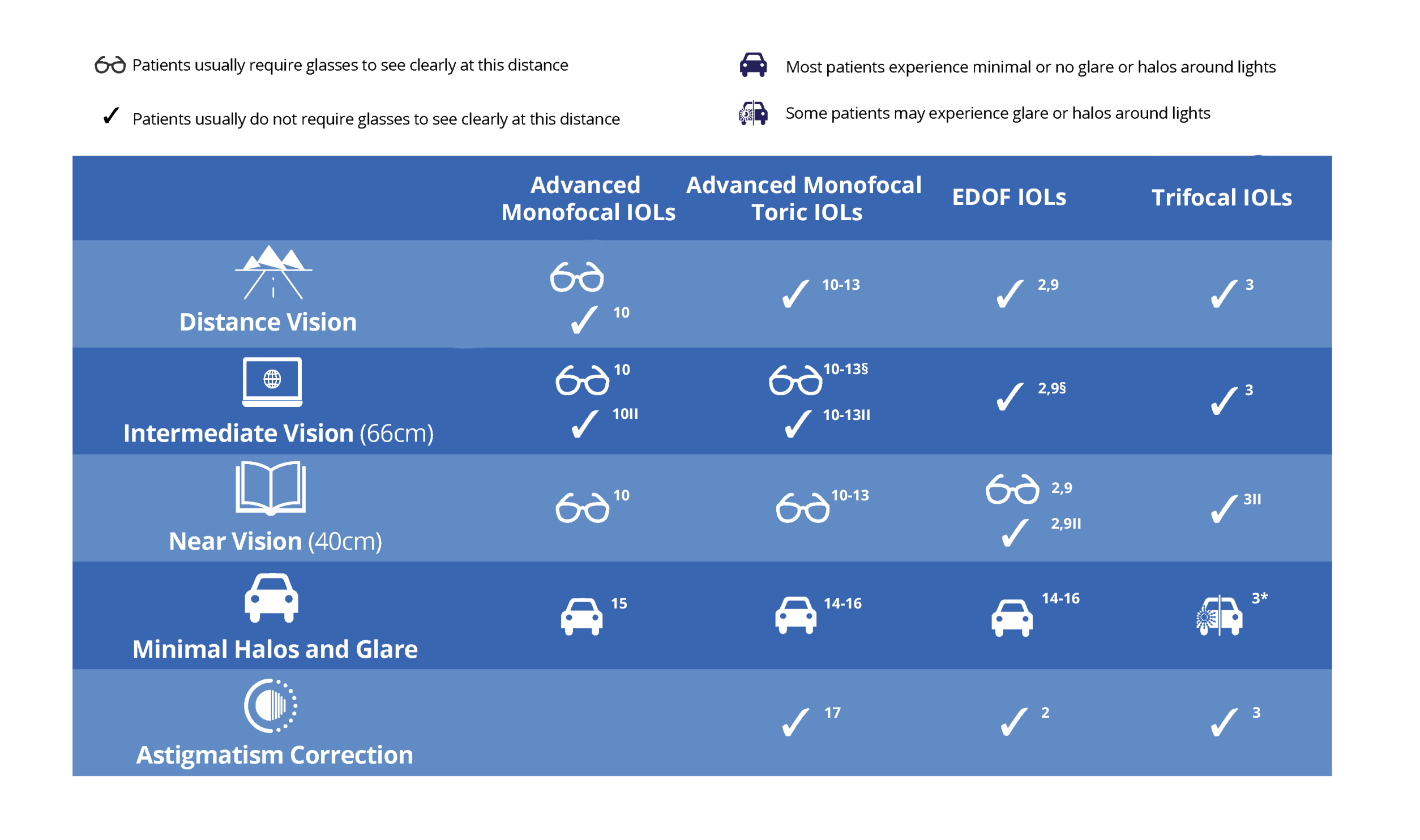
*Some trifocal IOL patients may experience visual disturbances such as a halo around bright lights.
§Some monofocal IOL patients may find tasks like reading fine print are improved by wearing glasses.
IIFunctional vision typically allows most people to see adequately at a given distance for daily activities, but glasses may be needed for more concentrated work such as reading small font, reading for extended periods, or reading in low light conditions.
Compare the Images to Discover
the Difference Each Intraocular Lens Has To Offer
Discuss your intraocular lens (IOL) options with your surgeon to ensure you receive the IOL most suited to your needs. How glasses-free would you like to be?
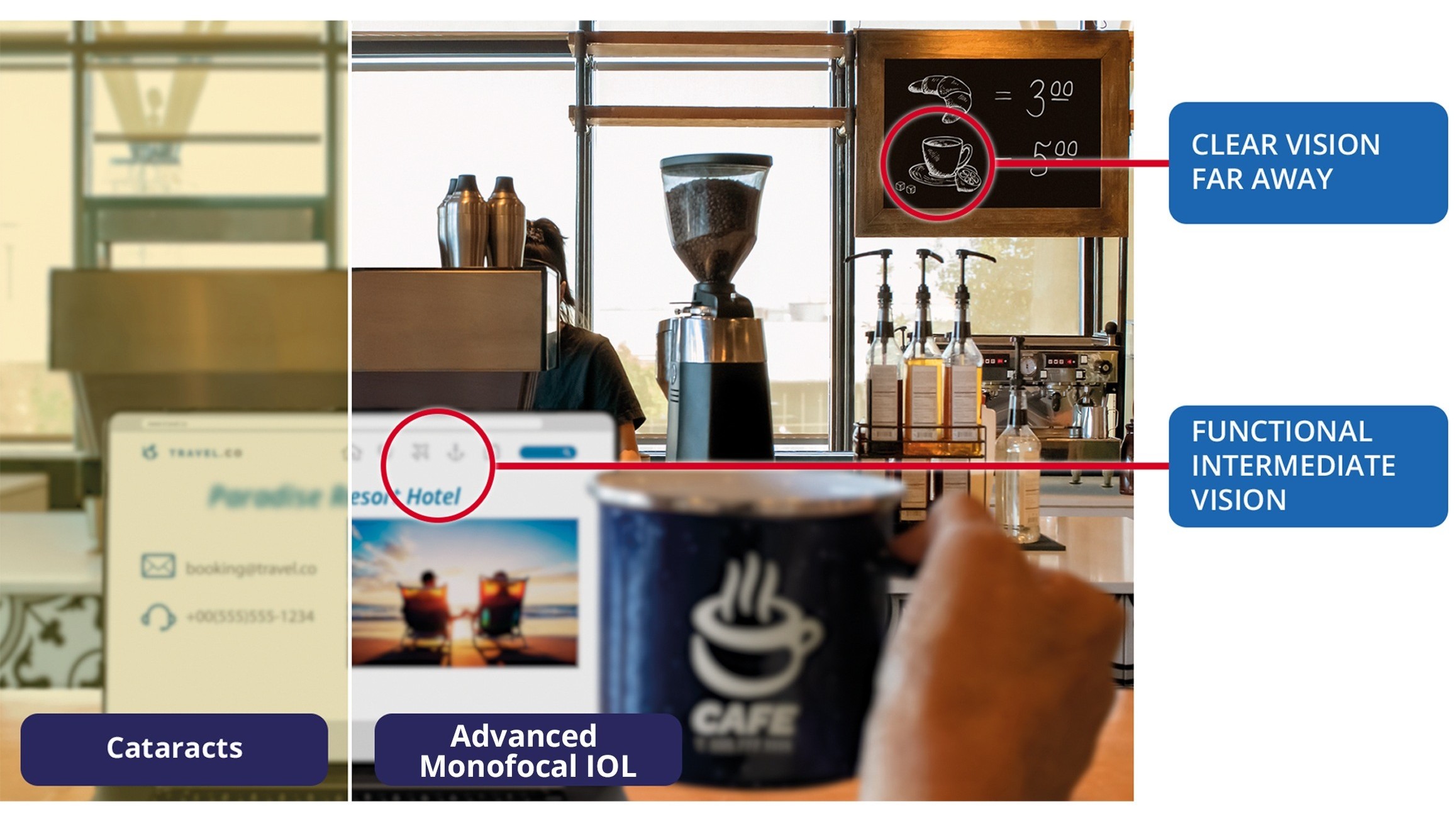
ADVANCED MONOFOCAL LENS (DAYTIME)
Clear distance and functional intermediate vision18,19
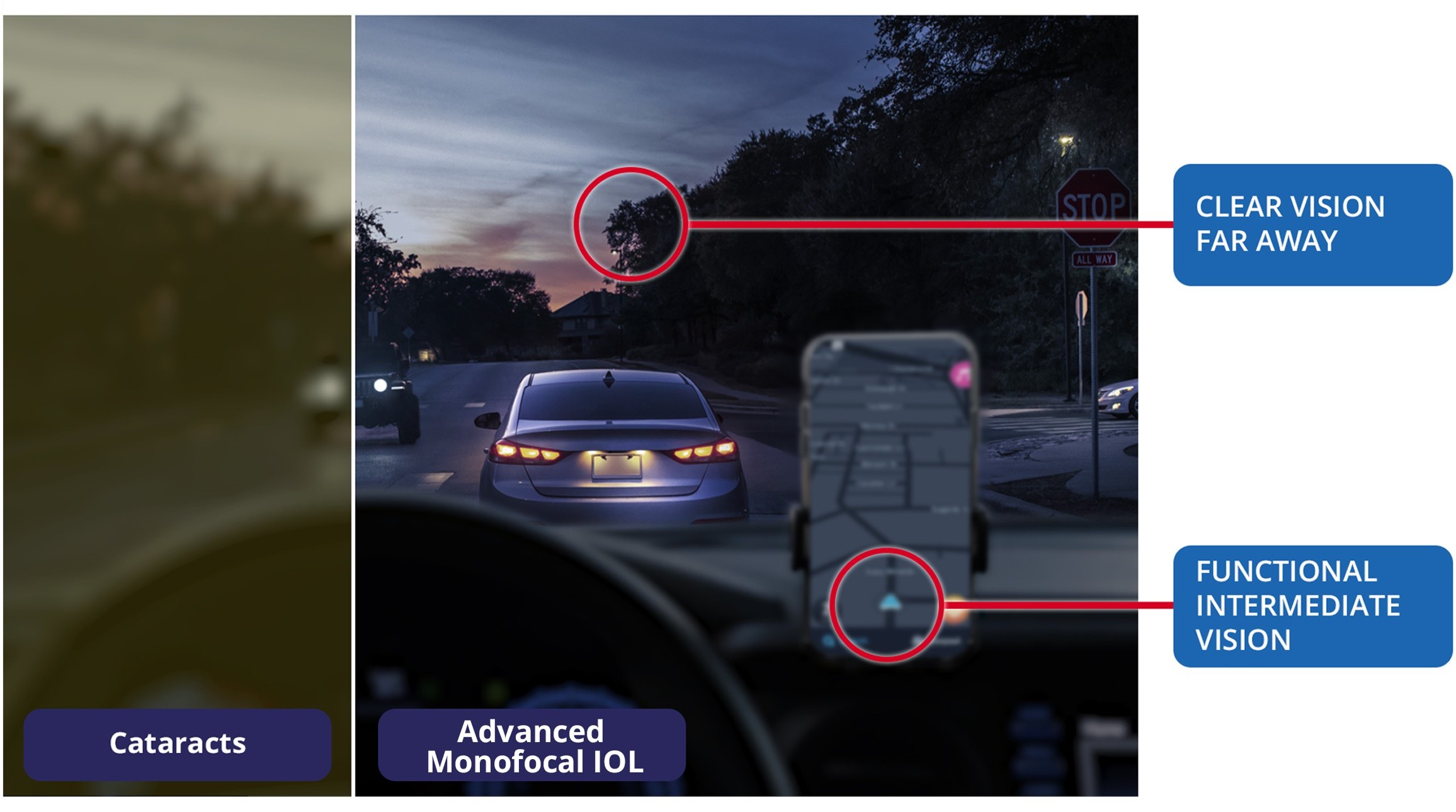
ADVANCED MONOFOCAL LENS (NIGHTTIME)
Clear distance and functional intermediate vision18,19
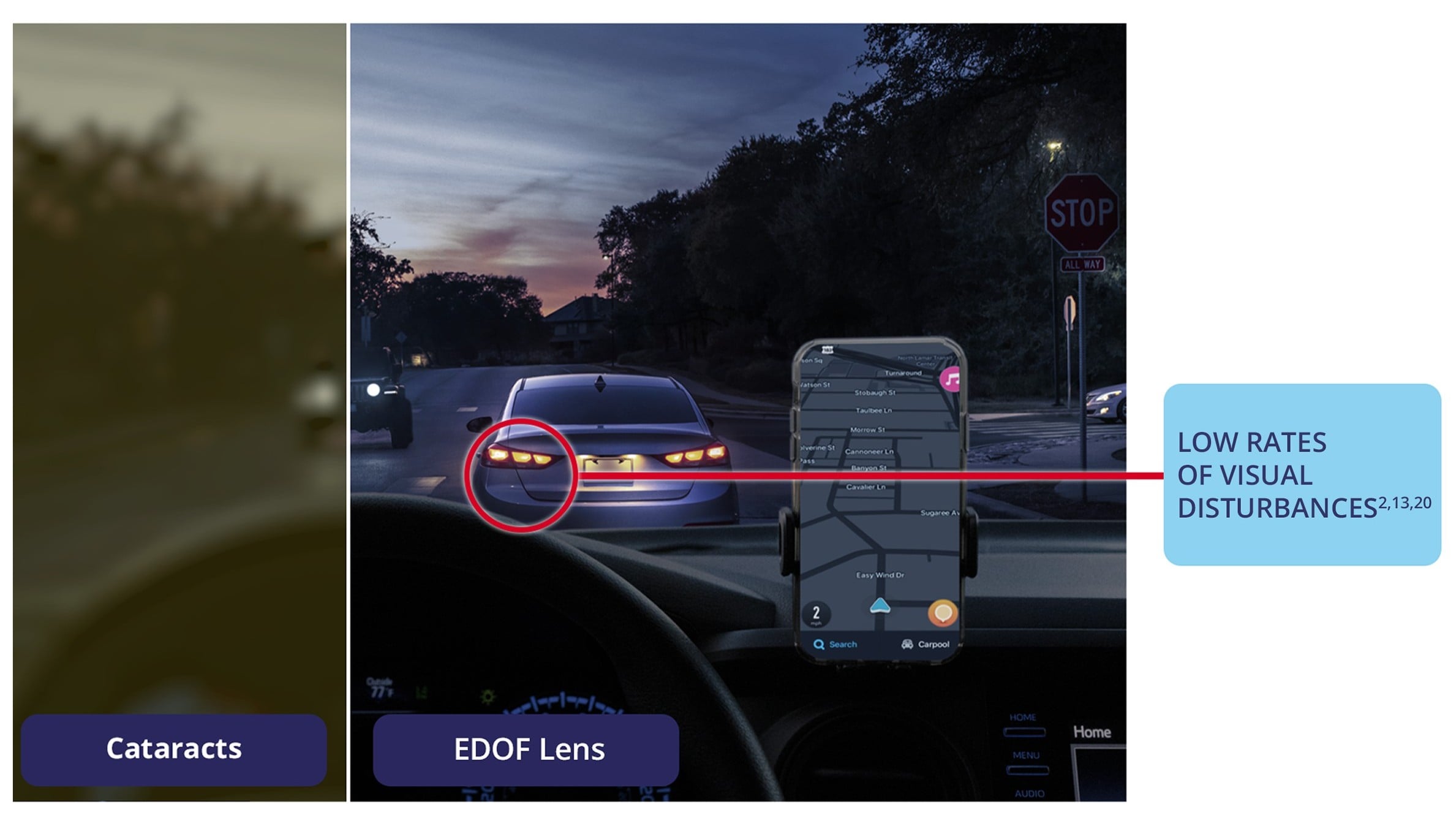
EDOF LENS (DAYTIME)
Clear distance, clear intermediate and functional near vision2,9
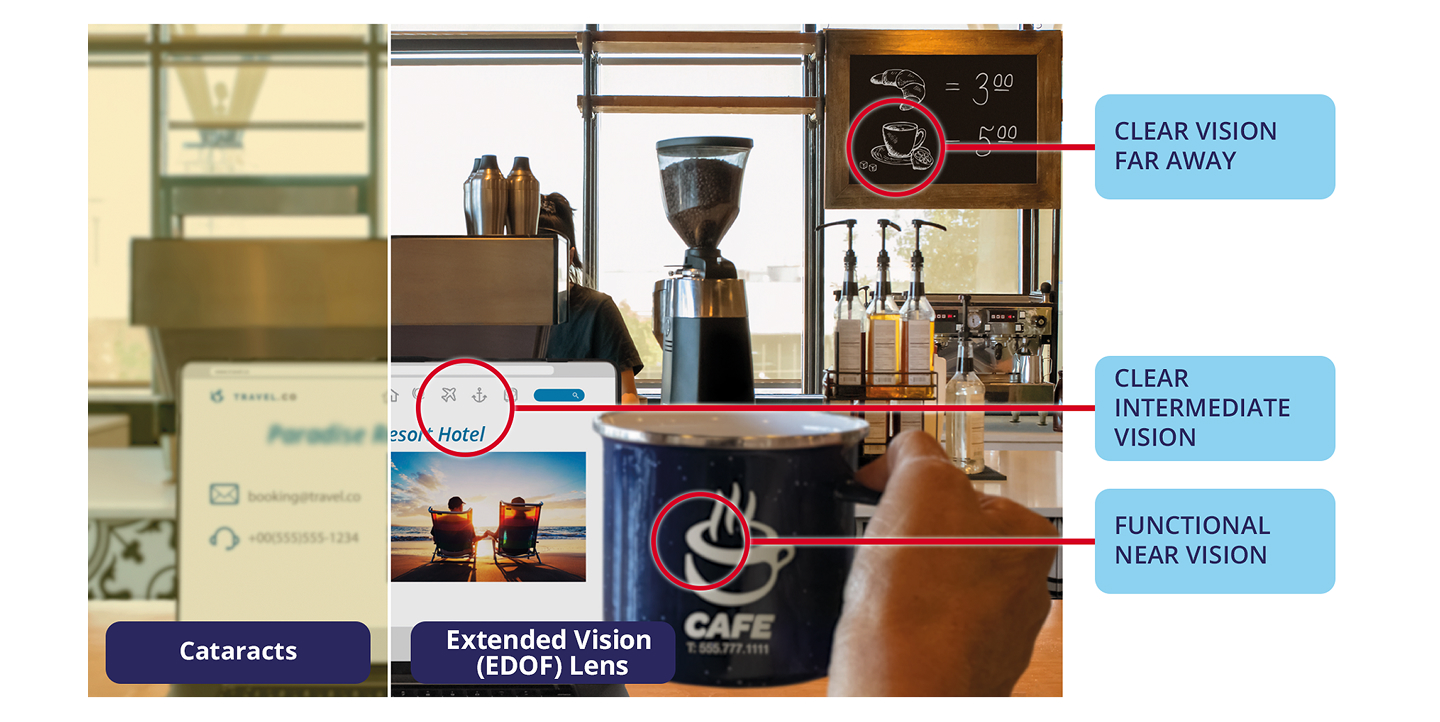
For illustration purposes only; personal experiences may vary.
EDOF LENS (NIGHTTIME)
Clear distance, clear intermediate and functional near vision2,9
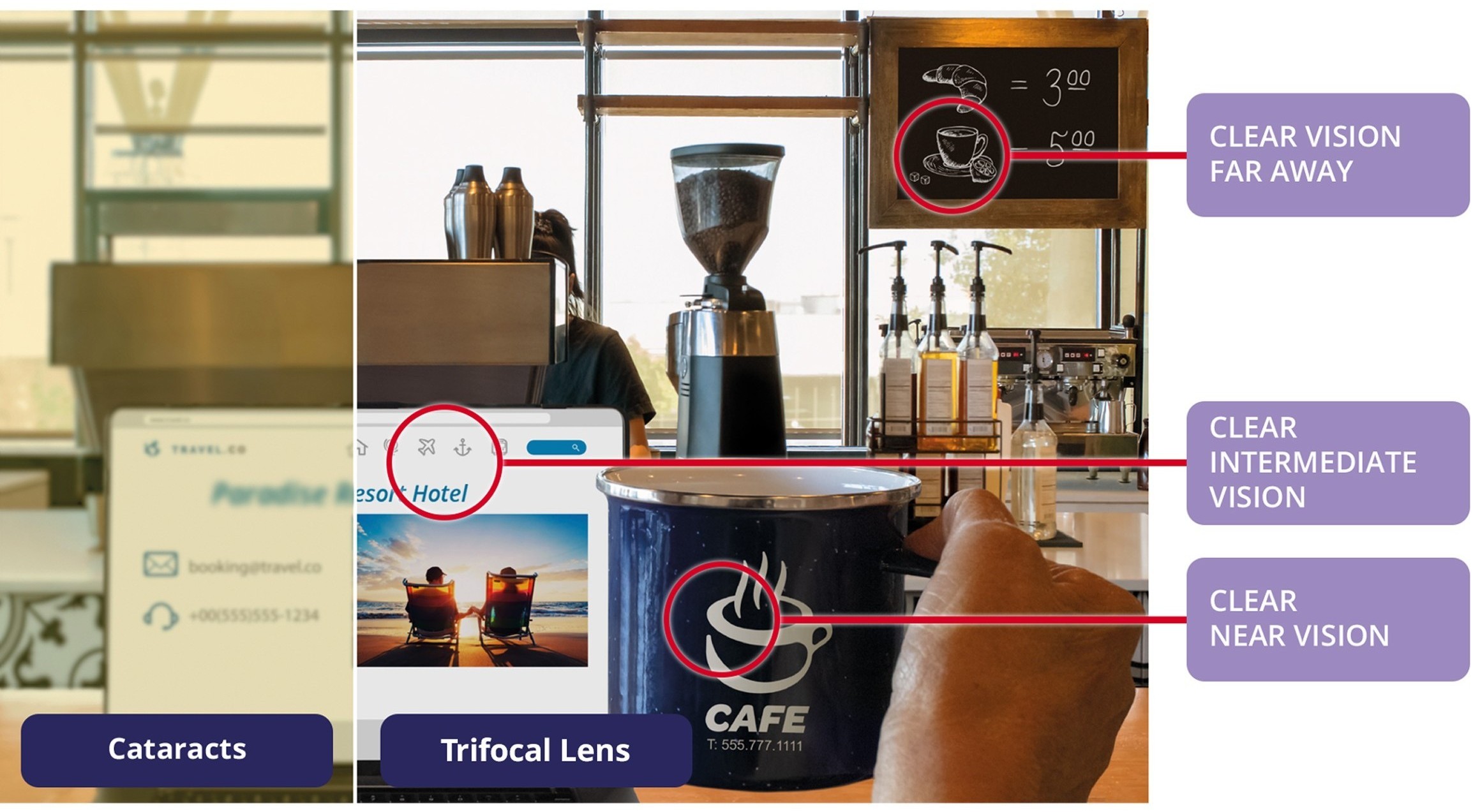
TRIFOCAL LENS (DAYTIME)
Clear distance, clear intermediate and excellent near vision3,21
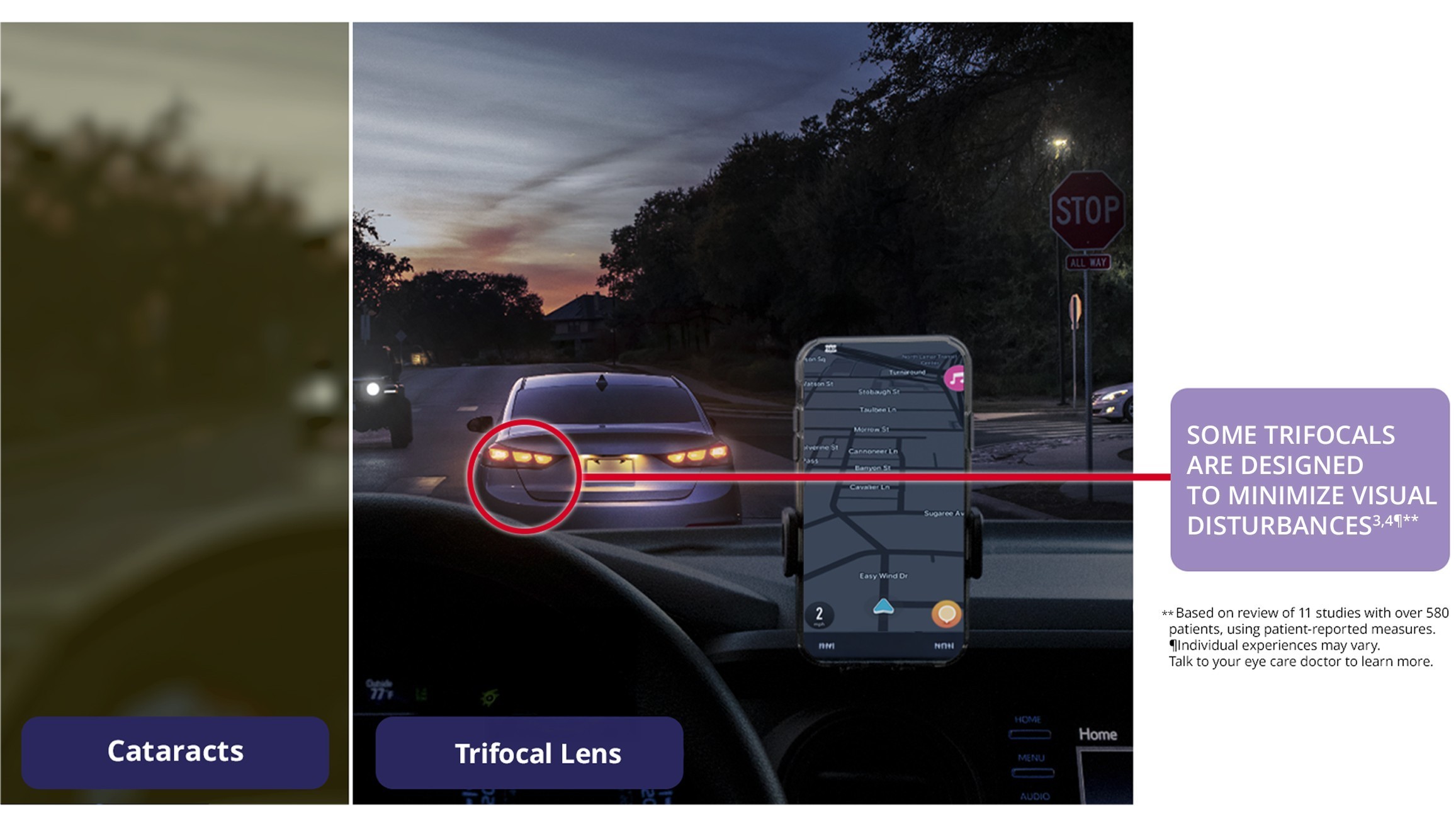
TRIFOCAL LENS (NIGHTTIME)
Clear distance, clear intermediate and excellent near vision3,21
REFERENCES
1. terHorst C. American Academy of Ophthalmology (AAO). "Choosing an Artificial Lens for Cataract Surgery." Available at: https://www.aao.org/eye-health/treatments/best-artificial-lens-IOL-cataract-surgery. Accessed: November 1, 2021.
2. Zhu D, Ren S, Mills K et al. Rate of Complete Spectacle Independence with a Trifocal Intraocular Lens: A Systematic Literature Review and Meta-Analysis. Ophthamol Ther. 2023;12(2):1157-1171.
3. Maxwell A, Suryakumar R. Long-term effectiveness and safety of a three-piece acrylic hydrophobic intraocular lens modified with hydroxyethyl-methacrylate: an open-label, 3-year follow-up study. Clin Ophthalmol. 2018;12:2031-2037.
4. MarketScope LLC. 2024 Premium Cataract Surgery Market Report. Published October 2024. St. Louis, MO: MarketScope LLC; 2024.
5. Alcon Data on File, 2024. [REF-24102].
6. Alcon Data on File, 2024. [REF-24222].
7. Alcon Data on File, 2024. [REF-25409].
8. Micheletti JM, Duncan NB, Hall B. Head-to-Head Comparison of Intermediate Vision of Two Monofocal Intraocular Lenses. Clin Ophthalmol. 2023;17:3983-3990.
9. Varma, Devesh, et. al. Clinical outcomes of a new non-diffractive presbyopia-correcting intraocular lens from two large confirmatory studies. AAO 2020. Abstract: PA005.
10. Bala C, Poyales F, Guarro M, et al. Multicountry clinical outcomes of a new nondiffractive presbyopia-correcting IOL. J Cataract Refract Surg. 2022;48(2):136-143.
11. Das KK, Werner L, Collins S, Hong X. In vitro and schematic model eye assessment of glare or positive dysphotopsia-type photic phenomena: comparison of a new material IOL to other monofocal IOLs. J Cataract Refract Surg. 2019;45(2):219–227.
12. Nuijts RMMA, Bhatt U, Nanavaty MA, Roberts TV, Peterson R, Teus MA. Three-year multinational clinical study on an aspheric hydrophobic acrylic intraocular lens. J Cataract Refract Surg. 2023;49(7):672–678.
13. Modi S, Lehmann R, Maxwell A, et al. visual and patient-reported outcomes of a diffractive trifocals intraocular lens compared with those of a monofocal intraocular lens. Ophthalmology. 2021;128(2):197-207.
14. McCabe C, Berdahl J, Reiser H, et al. Clinical outcomes in a U.S. registration study of a new EDOF intraocular lens with a nondiffractive design. J Cataract Refract Surgery. 2022;48(11):1297-1304.
15. Kohnen T, Lapid-Gortzak R, Ramamurthy D, et al. Clinical outcomes after bilateral implantation of a diffractive trifocal intraocular lens: A worldwide pooled analysis of prospective clinical investigations. Clinical ophthalmology. 2023;17:155-163.
Consult your doctor about the available treatment options/products and on the relevant safety information.
Please refer to relevant product direction for use for complete list of indications, contraindications and warnings.