What is Age-Related Macular Degeneration (AMD)?
What is Age-Related Macular Degeneration (AMD)?
Overview
About AMD
A leading cause of vision loss
Age-related macular degeneration (AMD), also known as macular degeneration, is a degenerative eye disease. As the condition progresses, AMD can cause permanent and irreversible loss of central vision, or the images you see directly in front of you. Macular degeneration can progress slowly over several years or strike quickly and severely reduce central vision in months or even weeks.
AMD affects the macula—the central part of the retina at the back of the eye that helps you see fine details.
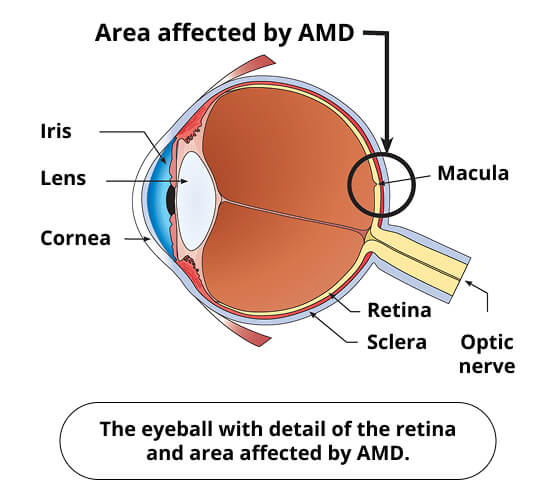
By damaging the macula, AMD reduces colour perception and contrast, sometimes impairing your ability to drive, read, or recognize faces. However, peripheral, or side vision remains functional.
Dry AMD
What is dry AMD?
There are two types of age-related macular degeneration (AMD): dry and wet. Dry AMD is more common, accounting for about 90% of AMD cases. Dry macular degeneration may develop in one eye or both eyes, as light-sensing cells in the macula slowly break down.
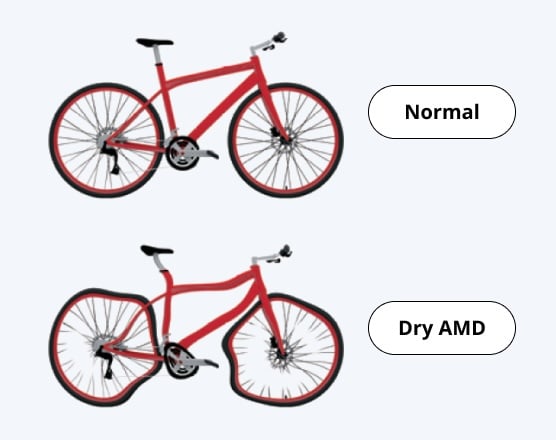
As dry AMD progresses, blurred or blank spots may occur in your central visual field. Over time, everyday activities like reading and driving can become difficult.
Unless dry macular degeneration is detected in a routine eye exam, you may not even realize you have AMD because there may be little or no visual symptoms until it is more advanced. That’s because dry AMD usually progresses slowly and without pain over a period of years. Sometimes AMD may occur only in one eye, while the other eye remains unaffected. This could mean there are no noticeable changes in overall vision.
Treatment of Dry AMD
Treatment of dry AMD focuses on monitoring and slowing its progression. Your eye care professional may also recommend lifestyle and dietary changes, together with vitamin supplementation specifically designed for your eyes. High daily doses of certain vitamins and minerals have been shown to delay the progression of dry macular degeneration, from an intermediate to an advanced stage, and maintain healthy vision.
Wet AMD
How wet AMD differs from dry
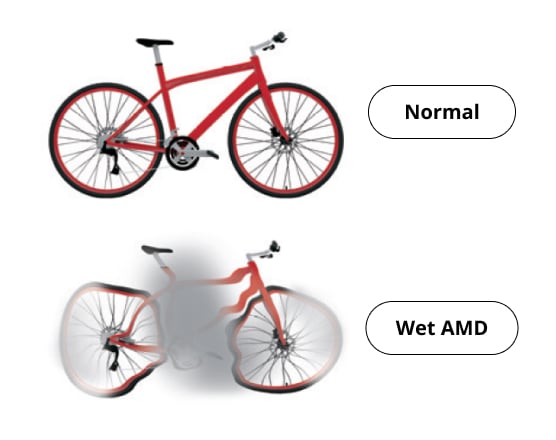
Wet AMD is more severe than dry AMD and can lead to irreversible central vision loss in months or even weeks. It’s less common than dry AMD, accounting for about 10-15% of all cases of macular degeneration. Wet AMD involves the buildup of blood vessels in the deepest layers of the eye that leak fluid or blood, which can then accumulate in the macula, causing irreversible damage. Doctors may use prescription drugs, photodynamic, and laser therapy in the treatment of wet AMD.
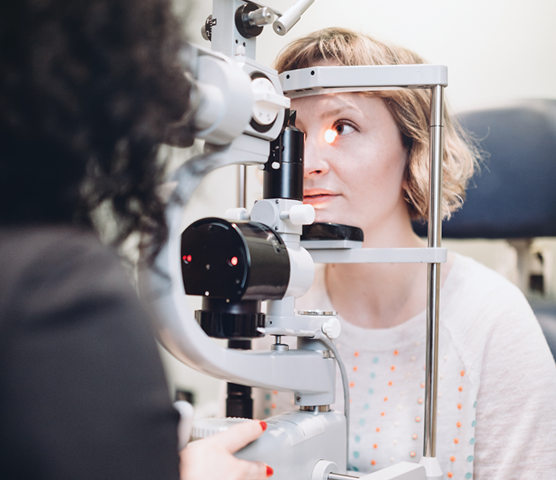
In some cases, dry macular degeneration can advance and turn into wet macular degeneration. Because progression from dry to wet AMD can occur rapidly, regular checkups are very important. To diagnose AMD, your eye care professional may inspect your retina using a variety of tests at their disposal, and you can also test your vision at home by using an Amsler Grid.
Early detection is key
While there's no cure for wet age-related macular degeneration (AMD), there are ways to slow the disease and help you see better for longer. But early detection and timely treatment hold the key to saving your sight.
You can help maintain your eye health by visiting your eye care professional regularly, eating a healthy diet, and taking ocular vitamins as recommended.
Signs and symptoms of AMD
Don’t let AMD go unnoticed
Symptoms of AMD may include:
• Worse or less clear vision
• Dark, blurry areas in the centre of your vision
• Straight lines look wavy
• Worse or different colour perception
• Trouble seeing in low light
• Blank spots in your vision

Living with AMD
What AMD means to you
Symptoms of AMD may include:
When you have AMD, you may need to seek help or change the way you do some of your everyday activities. But with the right support, you should be able to remain independent and maintain a good quality of life.
A significant loss of central vision can make activities like reading and driving very difficult. However, independent living may still be possible with the help of visual aids and rehabilitation.

Can AMD be prevented?
While doctors do not yet know how to completely prevent AMD, a healthy lifestyle consisting of not smoking; a diet rich in fruits and vegetables, but limited in red meat; use of sunglasses when outside; regular eye examinations; and AREDS2 vitamins when they are indicated, will increase the chance of maintaining healthy vision for a lifetime.

Important Safety Information
To be sure this product is right for you, always read and follow the label.
This site is intended for a Canadian Audience
TO BE SURE THIS PRODUCT IS RIGHT FOR YOU,
ALWAYS READ AND FOLLOW THE LABEL