
Refuse to Reuse
Stand against the reuse of Single-Use Devices
Set an example for others to follow
When it comes to healthcare specialists, patients trust surgeons and nurses. However, when surgeons reuse Single-Use Devices (SUDs), or nurses prepare SUDs for reuse, patient safety may be compromised. As a healthcare specialist, you have to ensure that care is never compromised, and corners are not cut because it can lead to real problems later.
Be a role model and lead by example. Refuse to Reuse Single-Use Devices.

Cut costs, not corners
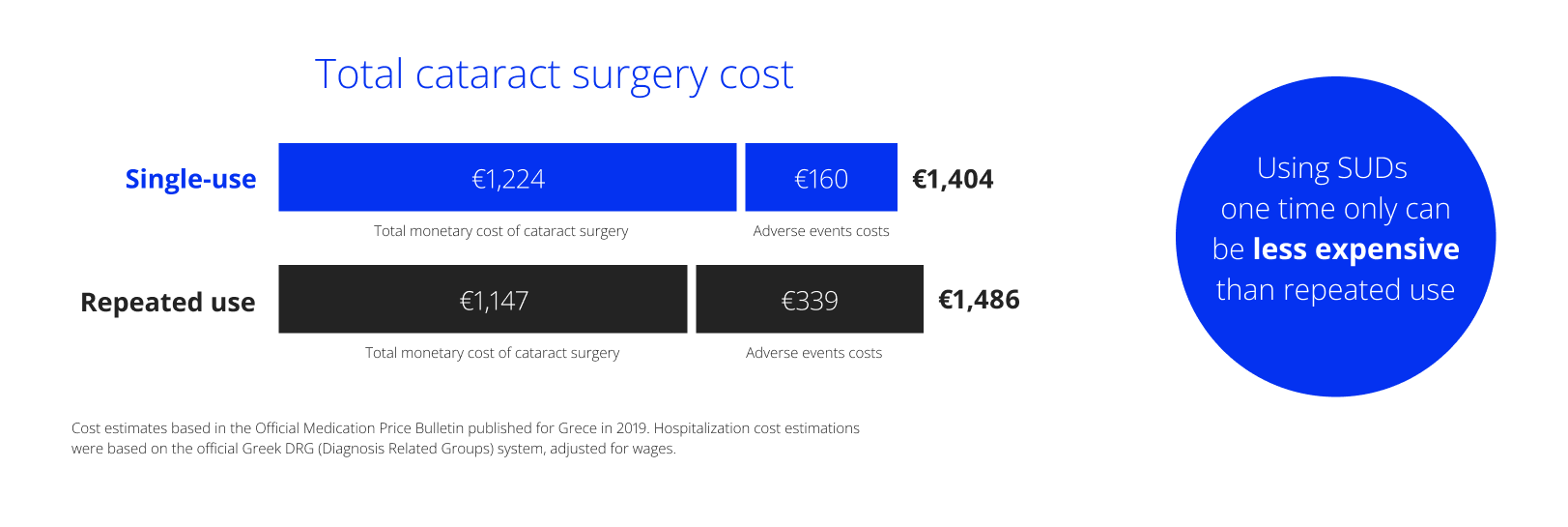
Keeping costs under control is important, especially when everybody is under pressure to be as efficient as possible. Using SUDs only one time can be less expensive than repeated use.
A recent study showed that the expected cost of single-use cataract surgery, including the cost of possible complications, is €1,404 while increasing to €1,486 when reusing SUDs. This represents a cost increase of almost 6%.1
Don’t put yourself or patients at risk
Reuse of SUDs can expose patients and users to unnecessary risks such as cross-infection, endotoxin reaction, chemical burns, and sensitization1,2. One of the risks is contamination which could cause Toxic Anterior Segment Syndrome (TASS)1,2. TASS is one of the potential risks of reusing SUDs, requiring significant post-opearative interventions, causing unnecessary pain to the patient and invites litigation. Not to mention, it puts an extra burden on healthcare resources.
Why increase patients’ risk of TASS1,2?
Reusing Single-Use Devices is a risk factor.
Refuse to Reuse.
Single-Use Devices perform best when they are used once3,4
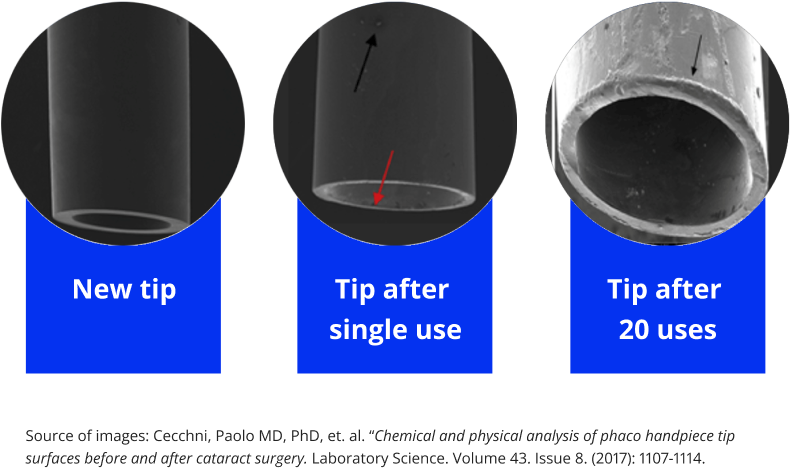
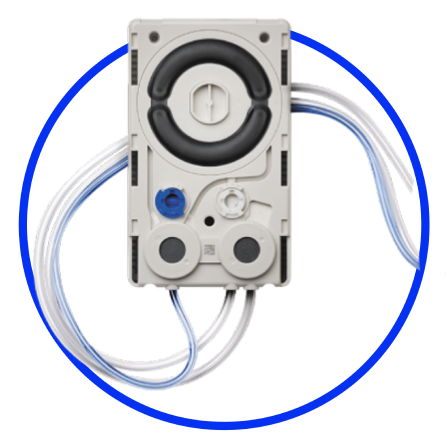
SUDs are designed to deliver the best possible surgical experience and hygiene levels in a dedicated, single-use format. Any additional uses will decrease the efficiency.
For example, when phaco tips are reused, they are associated with significantly higher total ultrasound (U/S) time, torsional U/S time and cumulative dissipated energy (CDE) compared to single-use tips3.
To ensure you are getting the best out of your SUDs, Refuse to Reuse.
Set the benchmark
for best-in-class hygiene
Appropriate hygiene should always be considered as part of the surgery preparation. When you or your team decide to cut corners and reuse SUDs, it erases any progress in providing exceptional care.
If you’re mindful and careful enough to disinfect before surgery and do the vital checks after the operation, ensure patients are cared for by using Single-Use Devices only once.
Refuse to Reuse.
Alcon Experience Academy
For relevant training content from industry thought leaders
IMPORTANT PRODUCT INFORMATION
Caution: Federal (USA) law restricts this device to sale by, or on the order of, a physician.
Indication: The NGENUITY® 3D Visualization System consists of a 3D stereoscopic, high-definition digital video camera and workstation to provide magnified stereoscopic images of objects during micro-surgery. It acts as an adjunct to the surgical microscope during surgery displaying real-time images or images from recordings.
Warnings: The system is not suitable for use in the presence of flammable anesthetics mixture with air or oxygen. There are no known contraindications for use of this device.
Precautions: Do not touch any system component and the patient at the same time during a procedure to prevent electric shock. When operating in 3D, to ensure optimal image quality, use only approved passive-polarized glasses. Use of polarized prescription glasses will cause the 3D effect to be distorted. In case of emergency, keep the microscope oculars and mounting accessories in the cart top drawer. If there are any concerns regarding the continued safe use of the NGENUITY® 3D Visualization System, consider returning to using the microscope oculars.
ATTENTION: Refer to the user manual for a complete list of appropriate uses, warnings and precautions.
References
1. NGENUITY® 3D Visualization System User Manual.
2. Alcon Data on File. 2017.
3. Berquet F, Henry A, Barbe C, et al. Comparing heads-up versus binocular microscope visualization systems in anterior and posterior segment surgeries: a retrospective study. Ophthalmologica. 2020;243(5):347-354.
4. González-Saldivar G, Chow DR. Optimizing visual performance with digitally assisted vitreoretinal surgery. Ophthalmic Surg Lasers Imaging Retina. 2020;51(4):S15-S21.
5. Hamasaki I, Shibata K, Shimizu T, et al. Lights-out surgery for strabismus using a heads-up 3D vision system. Acta Med Okayama. 2019;73(3):229-233.
6. Kita M, Mori Y, Hama S. Hybrid wide-angle viewing-endoscopic vitrectomy using a 3D visualization system. Clin Ophthalmol. 2018;12:313-317.
7. Zhang S, Wang L, Wei Y, et al. The preliminary experiences with three-dimensional heads-up display viewing system for vitreoretinal surgery under various status. Curr Eye Research. 2019;44(1):102-109.
8. VERION™ Digital Marker M User Manual.
9. Mouro-Coelho N, Nascimento J, Henriques J, Medeiros MD. Three-dimensional display systems in ophthalmic surgery – a review. European Ophthalmic Review. 2019;13(1):31-36.
10. Eckardt C, Paulo EB. Heads up surgery for vitreoretinal procedures: An experimental and clinical study. Retina. 2016;36:137-147.
11. Alcon Data on File, 2022.
!2. Market Scope: 2021 Annual Sponsored US Cataract Surgeon Survey Report. May 2021.